The Main Principles Of Permian Basin Pipeline Construction
Things about Permian Basin Pipeline Construction
Table of ContentsThe Greatest Guide To Permian Basin Pipeline ConstructionSome Known Details About Permian Basin Pipeline Construction What Does Permian Basin Pipeline Construction Mean?Examine This Report about Permian Basin Pipeline ConstructionEverything about Permian Basin Pipeline ConstructionThe Facts About Permian Basin Pipeline Construction UncoveredPermian Basin Pipeline Construction - Truths
Cured-in-place pipe (CIPP) is a trenchless innovation utilized to set up water, sewage system, and various other pipes without calling for major excavation or invasive excavating. The procedure begins by putting a lining into the existing pipework, which is after that full of resin that hardens to develop an irreversible pipeline within the existing pipe.At MaxLiner United States, we comprehend the advantages of using CIPP, which include its price, speed, and minimal disturbance throughout setup. This makes it an ideal option for professionals, plumbing technicians, services, and communities seeking to lessen downtime while installing brand-new pipes. One of the primary advantages of CIPP is its cost savings on labor and devices, causing a more cost-efficient solution than traditional pipeline replacement approaches.
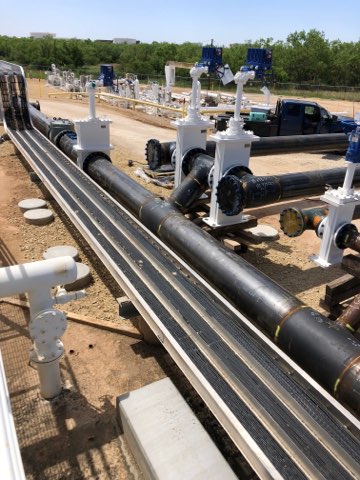
Instead, a liner is inserted into the damaged pipe and cured in location with heat, developing a smooth repair that provides lasting defense versus origin seepage, rust, opening damages, and various other usual concerns with existing pipes. Not only does this technique remove the need for substantial excavating, yet it also eliminates the possible dangers related to contaminated materials removal.
The Ultimate Guide To Permian Basin Pipeline Construction
Thus, expenses tend to be less than changing entire lengths of piping through open-cut setups even when factoring in the cost of liner products. Due to its reduced environmental effect and cost financial savings prospective, cured-in-place pipe installation is coming to be increasingly popular as an alternative to conventional repair in different markets.
When it pertains to cured-in-place pipe (CIPP) setup, lots of advantages come from its marginal time and expense. CIPP installments can be set up in a portion of the time it would certainly take for standard pipe substitute since no excavation is required. Rather than excavating into the surrounding soil and removing existing pipelines, CIPP utilizes cutting edge trenchless technology to install material liners or polyester fiber tubes inside existing pipes
The Definitive Guide for Permian Basin Pipeline Construction
This helps to lessen downtime and keep your project on the right track, causing time savings that would not have actually been possible with conventional pipeline replacement systems. Whether getting rid of smaller sized areas of piping or doing full relining tasks, this method has certain benefits when it concerns expense. Not only is tools rental removed considering that no excavation is needed, however so are site repair costs because a marginal surface area fixing may be required after installment.
For that reason, with very little time and expense required for setup, cured-in-place pipe installment is a great option for cutting down on labor costs without giving up quality work. As we'll talk about in the following area, this kind of setup offers substantial advantages when it pertains to reducing disturbance around homes and organizations.
The 5-Minute Rule for Permian Basin Pipeline Construction
This trenchless installment is a lot simpler to execute than traditional pipe laying. As the name indicates, many excavation and relevant site prep work is stayed clear of due to the fact that the new pipes are fed through existing avenues. This makes it feasible to set up below ground pipes in a fraction of the time required for the much more traditional digging approach, which can develop unneeded interruption to the setting, regional roads, paths, nearby homeowner, etc.
Sometimes, it could take a little bit of excavating if these accessibility points are not already set up in existing upkeep openings or catch containers. The result must still be less disruptive than digging deep into lengthy trenches, however more info something to consider prior to devoting to this setup (Permian Basin Pipeline Construction). In general, cured-in-place pipeline installment is practical when minimal disruption is wanted since the majority of the underground infrastructure stays intact while giving restored stamina and integrity to existing pipes


The cured-in-place installment process starts with inspecting the pipe concerned to establish whether any type of damages is existing or needs replacement. Later, if necessary, cleaning should happen inside the pipeline to ensure that all material buildup is eliminated and all surfaces are smooth and uncontaminated prior to lining installment. When these actions are completed, an unique resin-coated felt or crossbreed felt and fiberglass textile is placed into the pipeline and uniformly dispersed along its length.
Permian Basin Pipeline Construction Fundamentals Explained
Curing (either ambient, warmed water or air, or UV) is introduced right into television when the lining installation is total, treating and shaping the material textile around the old pipeline's shape. It needs to be noted that excessive stress needs to be avoided at all prices due to the fact that it can trigger further damage to the system.
This in-depth section about the 'Cured-In-Place Installment Process' has actually explained its step-by-step procedure. By understanding what enters into this process and its troubles, we can appreciate exactly how helpful it can be for numerous piping repair work - Permian Basin Pipeline Construction. Currently allow us proceed to discover what sorts of products are utilized in this procedure in our next section
Some Known Details About Permian Basin Pipeline Construction
The suitable product can dramatically affect the job, consisting of cost-effectiveness, longevity, performance, and efficiency. Polymer liners are commonly favored for CIPP because they are highly durable and resistant to rust and wear and tear. They can additionally last anywhere from 10 to thirty years, depending on the quality of the materials used.
It is frequently less complicated, less disruptive, and extra cost-efficient than standard fixings. One of the main benefits of CIPP pipeline setup compared to the standard strategy of eliminating and changing any type of damaged pipe sections with brand-new product is that CIPP pipe does not need excavating or excavating the surrounding locations.
This minimizes the moment and labor needed for complex repair tasks. Finally, CIPP products are thinner than areas of the new pipeline, so they need extremely little area while using remarkable long life and resilience contrasted to other methods of repairing damaged pipes. While CIPP installation uses some distinct advantages over conventional approaches of fixing pipelines, it can have certain constraints relying on which sort of certain scenario needs it.
More About Permian Basin Pipeline Construction
Generally, CIPP pipe installment provides numerous benefits when it pertains to conserving time, money, and effort throughout pipe fixing jobs. These benefits make it an attractive option for those trying to find quickly yet trusted ways to deal with broken pipes in your home or in business settings. In the following section, we will talk about a summary of cured-in-place pipe installment in better information to offer you an even better understanding of its several benefits.